A person can be outwardly functional yet inwardly depleted: praying without presence, sleeping without rest, reacting sharply at home, or carrying a heaviness they cannot easily name. Spiritual wellbeing is not a vague feeling of positivity. In an Islamic framework, it concerns the soundness of the heart, the strength of one’s relationship with Allah, protection from spiritual harm, and the practical order of daily life.
It also requires discipline in how we interpret distress. Not every difficult season is evidence of sihr, evil eye or al-mass. Equally, a medical label does not automatically exhaust every possible dimension of human suffering. A mature approach avoids both extremes: spiritual neglect on one side and careless spiritual diagnosis on the other.
Spiritual Wellbeing Begins With Direction
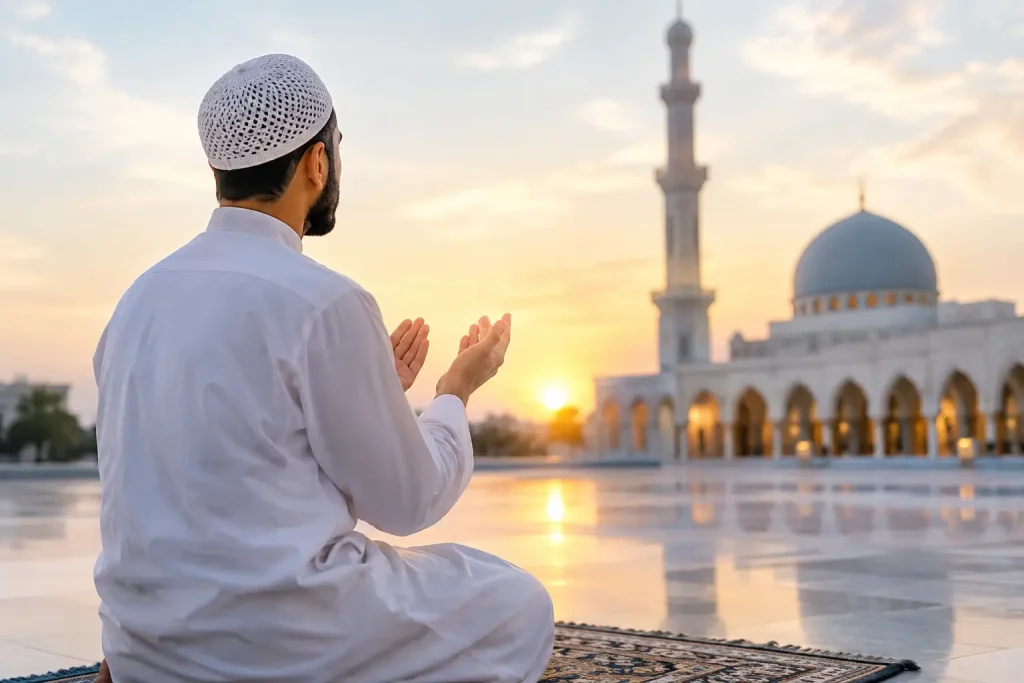
Allah says that hearts find rest in His remembrance. This does not mean a believer will never experience anxiety, grief, fatigue or illness. The Prophets themselves endured profound trials. Rather, remembrance gives the heart a direction when circumstances are unstable. It reconnects the servant to the One who knows what is hidden, hears the du’a that others do not hear, and has complete power over benefit and harm.
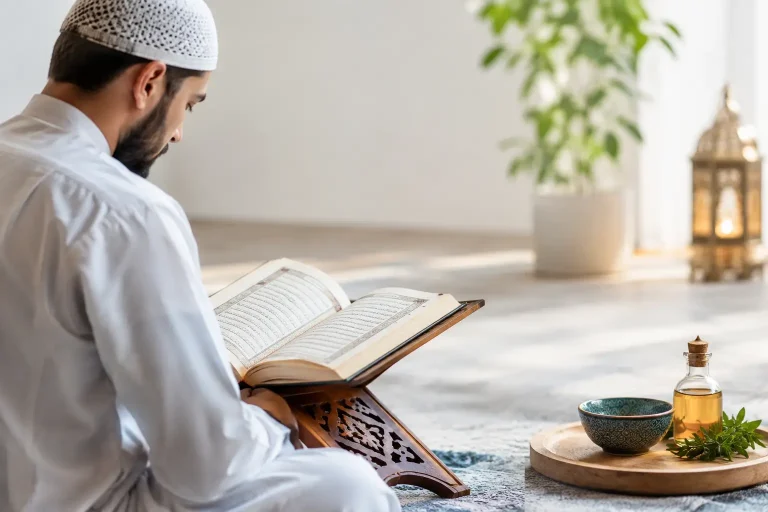
This direction is built through obligations before optional additions. Guarding the five prayers, correcting their times where possible, making sincere tawbah, and giving the Qur’an a fixed place in the day are not introductory habits to outgrow. They are the operating structure of a spiritually healthy life.
For many households, inconsistency is the real problem. A person may seek a powerful intervention while leaving the daily foundations unprotected. Spiritual protection is not merely something requested in a crisis. It is maintained through a continuing relationship with Allah.
Establish a daily protection routine
A workable routine should be realistic enough to sustain. Morning and evening adhkar, recitation of Ayat al-Kursi, the closing verses of Surah al-Baqarah, and the Mu’awwidhat are established components of Prophetic protection. Recite with attention, conviction and dependence upon Allah, not as hurried words performed under pressure.
Where there is concern for oneself, children or the home, regular self-ruqyah is a sound starting point. Recite Qur’anic verses and authentic supplications, blow lightly into the hands, and wipe over the body. Parents can do the same for young children. The value lies not in theatrical intensity but in consistency, correct belief and sincere reliance upon Allah.
The Heart Requires More Than Information
Many people know the verses of protection but remain spiritually exhausted because knowledge has not become practice. Spiritual wellbeing requires muhasabah – honest self-accounting. What is feeding resentment? What repeatedly weakens prayer? Which conversations, habits or pressures are leaving the heart scattered?
This is not an invitation to blame every hardship on personal failure. Illness, loss and oppression are real tests, and a person may suffer despite sincere worship. Yet self-accounting restores agency. It asks what can be repaired today: an overdue apology, a neglected salah, an unresolved family boundary, a pattern of isolation, or a private sin requiring repentance.
A useful practice is to keep a short record for several weeks. Note sleep, mood, physical symptoms, worship consistency, stressful events and ruqyah practice. This is not a diagnostic tool and cannot prove a spiritual cause. It can, however, reveal patterns that are otherwise missed and give a qualified practitioner or clinician clearer information.
When Distress May Need Wider Investigation
Persistent nightmares, unusual aversion to worship, recurring fear, family conflict, pain without a clear explanation, or sudden shifts in behaviour can be distressing. In some cases, believers may reasonably wish to explore whether a spiritual factor is involved. These signs are not proof. They can also arise from trauma, sleep disorders, depression, anxiety, neurological conditions, medication effects, relationship strain or other causes.
The correct response is not dismissal. It is structured investigation. Continue lawful ruqyah and protective worship while seeking appropriate medical or psychological assessment where symptoms warrant it. If there is risk of self-harm, harm to others, severe confusion, inability to function, chest pain, seizures or other urgent symptoms, immediate professional care is necessary.
Islam does not require a choice between sincere du’a and responsible treatment. The Prophet, peace be upon him, encouraged treatment while affirming that Allah is the healer. Medical care addresses physical and psychological mechanisms; ruqyah addresses the servant’s relationship with Allah and may be sought where spiritual harm is a credible concern. Sometimes both are needed. Sometimes one avenue brings clarity that the other cannot provide alone.
Use evidence carefully
Within ruqyah work, it is essential to distinguish categories of claim. Qur’an and authentic Sunnah provide the strongest foundation. Scholarly interpretation carries weight but may differ. Repeated practitioner observations can be useful, yet observation is not the same as proof. A proposed treatment model may be a working hypothesis, not an established conclusion.
This distinction matters particularly when considering Higher Ruqyah methodologies. A method should be assessed by its theology, its intended mechanism, its practical outcomes, its risks and the evidence available for it. Novelty by itself is not a decisive argument for prohibition, nor is novelty a reason to accept a method uncritically. The central boundaries remain tawhid, avoidance of shirk, obedience to Allah, sound judgement and patient inquiry.
Build a Home That Supports Spiritual Wellbeing
A household does not need to become tense or obsessive in order to take protection seriously. Constantly searching for signs of harm can itself increase fear and conflict. A better approach is to establish calm, visible routines: prayer is honoured, Qur’an is recited, disagreements are handled with restraint, and family members know they can speak about distress without ridicule.
Parents should teach children that Allah is their protector without making them afraid of the unseen. Adults should avoid turning every conflict, illness or setback into a spiritual accusation. Such assumptions can damage marriages, isolate vulnerable relatives and distract from practical solutions.
Spiritual strength is also supported by ordinary responsibilities. Adequate sleep, nourishing food, movement, meaningful work, companionship and reduced exposure to harmful stress are not separate from faith. The body has rights, families have rights, and the heart is affected by the conditions in which it lives. A person who has ignored exhaustion for months may need rest and medical support alongside ruqyah, not an ever-increasing treatment schedule.
Train for Capability, Not Dependence
Every Muslim household should possess a basic working knowledge of self-ruqyah, daily protection and the etiquette of seeking help. This reduces panic and makes families less dependent on dramatic personalities or unverified claims. For more complex cases, qualified and ethically grounded practitioners can provide structure, observation and accountability.
Training becomes especially valuable when it teaches people how to reason. Learners should know what is established, what is disputed, what is merely observed, and when a referral is needed. Advanced practitioners require even greater restraint: confidentiality, careful record-keeping, clear boundaries, awareness of safeguarding, and humility before cases that do not fit easy explanations.
The aim is not to create fear of unseen harm. It is to create Muslims who are prepared, spiritually anchored and able to respond wisely when difficulty comes.
Begin with what is already within reach tonight: pray with presence, recite protection with understanding, make a specific du’a for your household, and take one responsible step towards any health concern you have delayed. Steady return to Allah is often more transformative than searching for a dramatic answer.